
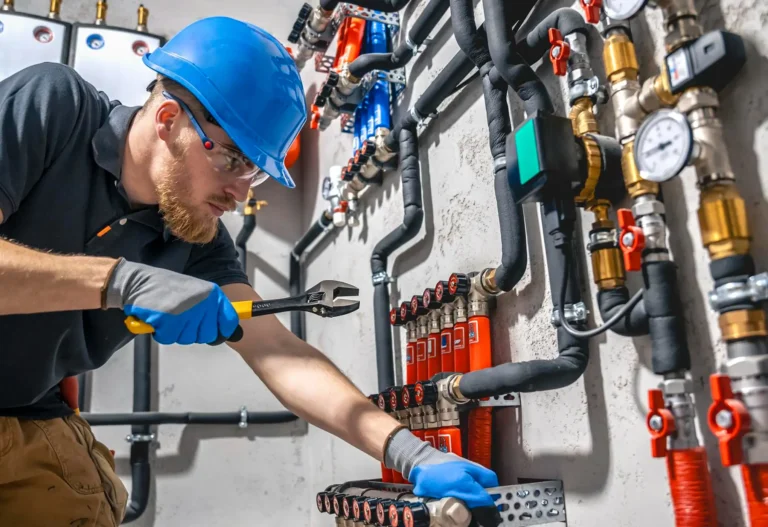

Expert Execution: What Happens When the Hot Water Stops?
Replacing a water heater isn’t just a “plug-and-play” job. It is a major mechanical update to your home that involves high-voltage electricity, combustible gas, and pressurized water. When you hire us, you aren’t just buying a tank; you are hiring a team that ensures your home stays up to code, your family stays safe, and your flooring stays dry. We take the guesswork out of the replacement process, handling everything from the initial permit to the final safety test.
The Installation Journey: Step-by-Step
When our team arrives at your door, we follow a strict protocol to ensure a flawless transition.
Step 1
Protection & Prep
We lay down floor runners and protective blankets. We don’t leave a trace of work behind except for a shiny new heater.
Step 2
System Shutdown & Drain
We safely disconnect power/gas and drain your old tank. If your old unit is leaking, we use specialized pumping equipment to remove the water without damaging your subfloor.
Step 3
The Swap
We remove the old unit and position the new one. This includes installing a new thermal expansion tank (a modern safety requirement) and high-quality brass shut-off valves.
Step 4
Calibrated Startup
We don’t just “turn it on.” We purge the air from your lines, check for gas “leaks” using electronic sniffers, and calibrate the temperature to a safe 120°F to prevent scalding.
Timelines: How Long Will You Be Without Water?
We respect your time. Most homeowners are surprised at how quickly a professional team can work
- Standard Tank Replacement: Typically takes 2 to 4 hours from the time we arrive to the time you have hot water again.
- Tankless Conversion: If you are switching from a tank to a tankless system, expect a full-day project (6 to 8 hours) as we need to modify gas lines and venting.
- Emergency Response: We prioritize "No Hot Water" calls, often offering same-day or next-day installation to minimize your downtime.
Permits & Regulations: Handling the Red Tape
Many homeowners don’t realize that in most jurisdictions, replacing a water heater requires a plumbing permit.
- Why it matters: A permit ensures that a city inspector verifies the job was done safely. This is crucial for your home insurance and for when you eventually sell your home.
- Our Role: We handle the paperwork. We pull the necessary permits, schedule the inspections, and ensure the entire installation meets or exceeds the National Fuel Gas Code and local plumbing ordinances.
Safety First: Our Non-Negotiables
Safety is our primary metric of success. Every installation we perform includes.
- Carbon Monoxide Testing: We verify that your exhaust vent is drawing gases out of the house properly, not "back-drafting" into your living space.
- Pressure Relief: We install a new T&P (Temperature and Pressure) Valve and discharge pipe to prevent the tank from ever becoming over-pressurized.
- Seismic Strapping: In relevant areas, we secure your tank to the wall studs to prevent tipping during a tremor or accident.
- Leak Detection: We often recommend (and install) automatic shut-off sensors that kill the water supply if a leak is ever detected in the future.
What to Expect During Our Visit
- Communication: You’ll receive a text when our technician is on the way with a photo of who is coming.
- No Surprises: We provide a firm, upfront price before any work begins.
- The Hand-Off: Once finished, we will show you exactly how to turn off the gas and water in an emergency and how to adjust your settings for vacation mode.
- Cleanliness: We haul away your old unit and all packaging. Your mechanical room will likely be cleaner than we found it.